
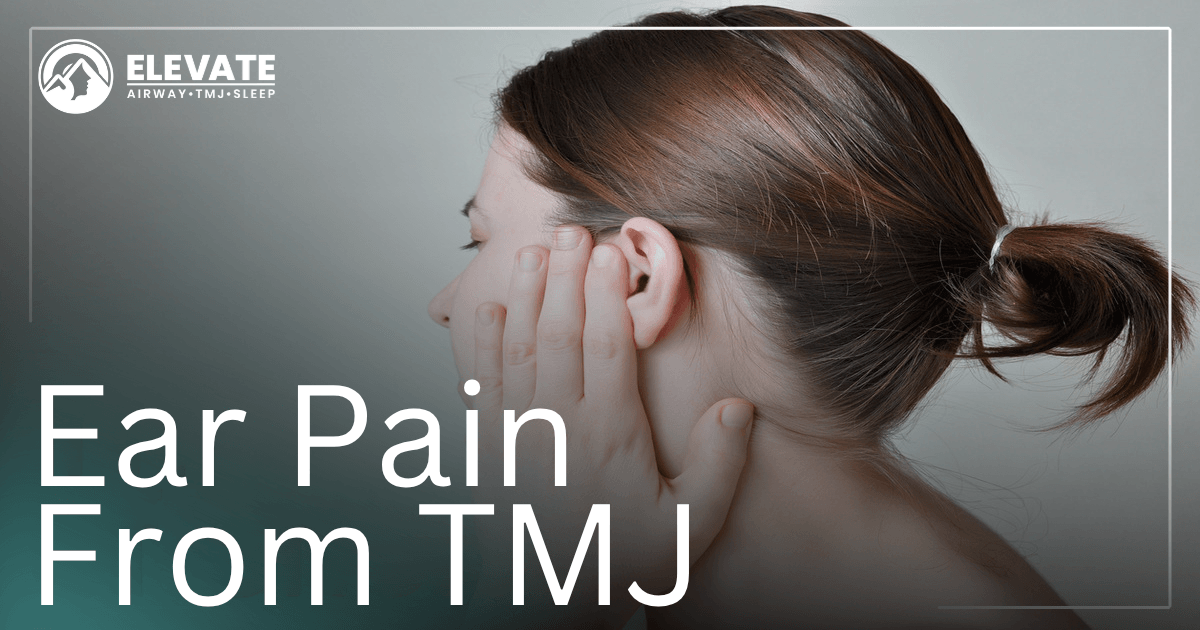
Can TMJ Cause Ear Pain?
Yes, TMJ can cause ear pain, and it happens more often than many people realize. When the temporomandibular joint sits just in front of the ear, irritation in that area can create symptoms that feel like they belong inside the ear itself. People sometimes assume they have an ear infection, sinus pressure, or lingering congestion, only to learn that the real issue involves the jaw joint and the muscles around it.
That overlap is one reason TMJ disorder can be so frustrating. The ear and jaw live in the same crowded neighborhood. They share space with nearby nerves, surrounding muscles, and connective tissues that all influence one another. If the temporomandibular joint is inflamed, strained, or not functioning properly, the result can be ear discomfort, fullness, popping sounds, pressure, or plain old pain that seems to come out of nowhere.
Understanding TMJ and Why the Ear Gets Involved
TMJ stands for the temporomandibular joint, the hinge that connects the lower jaw to the skull. You use this joint constantly, whether you are chewing, speaking, yawning, swallowing, or clenching your teeth through a stressful email. Because it works in partnership with jaw muscles, ligaments, and the bite, even small disruptions can create a chain reaction.
A temporomandibular joint disorder, often shortened to TMJ disorder or simply TMJ dysfunction, develops when that system is under strain. Sometimes the problem is joint inflammation. Sometimes it is jaw misalignment, overworked jaw muscles, teeth grinding, jaw clenching, or a bite that places uneven pressure on the joint. And sometimes it is not just one thing. It is a stack of little problems leaning on each other until the body starts complaining.
The reason ear pain enters the picture is anatomical. The jaw joint sits extremely close to the ear canal, and the muscles and nearby nerves in that area can transmit referred pain. In other words, the body does not always label the source correctly. A sore, irritated jaw can feel like an ear problem, just as shoulder tension can creep into the neck or a tooth problem can cause head pain.
How TMJ Related Ear Pain Feels
TMJ related ear pain does not always feel sharp or dramatic. For some people, it is a dull ache near the ear. For others, it feels like pressure, fullness, tenderness, or a blocked sensation, almost like the ear needs to pop but never quite does. Some people describe ear discomfort that comes and goes with chewing, talking, yawning, or waking up in the morning after a night of clenching.
TMJ related ear symptoms can also include clicking, popping sounds, ringing, sensitivity around the ear, and discomfort that radiates into the cheek, temple, neck, or head. Many patients are surprised to learn that what they thought was an ear issue may actually be part of a larger pattern of TMJ symptoms. If ear pain keeps showing up alongside jaw pain, facial soreness, limited mouth opening, or jaw tension, the jaw deserves a closer look.
Why TMJ Ear Symptoms Are Easy to Mistake for an Ear Infection
One of the biggest reasons people miss the connection is that ear symptoms feel so specific. If your ear hurts, naturally you think the ear is the problem. But TMJ related ear symptoms can mimic an ear infection surprisingly well, especially when there is fullness, pressure, or tenderness near the ear canal.
The difference is that an actual ear infection usually comes with signs of infection or fluid, while TMJ related ear pain often tracks with jaw movement and muscle tension. You may notice more pain after chewing steak, grinding your teeth at night, or spending the day with your shoulders up around your ears. The ear may feel off, but an exam may show nothing wrong inside it.
This is where the idea of referred pain matters. The temporomandibular joint, surrounding muscles, and nearby nerves can irritate nearby nerves and create pain signals that the brain interprets as coming from the ear. The source is one structure, but the sensation is felt in another. It is like hearing a car alarm on your block and assuming it is your car until you walk outside and realize the noise is two driveways over.
Common Symptoms That Can Point to TMJ Disorder
Ear pain is only one piece of the picture. TMJ disorder often shows up with a cluster of symptoms, and the combination matters more than any single complaint. Common symptoms include jaw pain, jaw discomfort, popping sounds, clicking, stiffness, trouble opening the mouth comfortably, facial soreness, and pressure around the temples.
Some people also deal with jaw headaches, neck strain, and even migraines. Others notice clenching, teeth grinding, worn teeth, or soreness first thing in the morning. Symptoms of TMJ can be subtle at first, then build over time. A person may start with occasional ear discomfort and later realize they also have muscle tension in the face, tenderness near the jaw joint, and pain that flares during stress.
What Actually Causes the Ear Pain in TMJ Disorder?
There is not just one mechanism. In some cases, joint inflammation in the temporomandibular joint creates local pain near the ear because the joint is so close to it. In other cases, overworked jaw muscles and surrounding muscles become tight and tender, creating pressure and referred pain that spreads toward the ear and side of the head.
Jaw clenching and teeth grinding are major culprits. They load the jaw joint and muscles for hours at a time, often without the person realizing it. That constant strain can produce TMJ tension, jaw tension, and inflammation that spills into the ear region. If the lower jaw is not tracking smoothly, or if jaw misalignment affects how the joint moves, the tissues around the area can become irritated enough to trigger ear symptoms.
There is also a functional relationship with the eustachian tube and the muscles around it. While TMJ is not the same thing as an ear disease, tension in the surrounding muscles may contribute to a sensation of fullness or pressure in the ear. That is one reason TMJ related ear complaints can feel so convincing.
Signs Your Ear Pain May Be Coming From the Jaw Instead
If ear pain gets worse when you chew, yawn, talk a lot, or open wide, that is one clue. If you also hear clicking or feel popping sounds in the jaw, that is another. Pain near the ear that arrives with jaw pain, facial fatigue, neck tension, or a history of clenching often points toward TMJ dysfunction rather than a primary ear issue.
Another clue is timing. Some people wake up with ear discomfort and jaw soreness after nighttime grinding. Others notice pain after dental work, prolonged stress, gum chewing, or heavy use of the mouth. When symptoms rise and fall with jaw activity, the root cause may be in the temporomandibular joint tmj system rather than inside the ear itself.
Still, not every case is obvious. That is why a careful evaluation matters. Ear pain should not be brushed off, especially if it is persistent, severe, or paired with hearing changes, fever, drainage, or sudden symptoms.
When to Rule Out Other Ear Problems
TMJ can absolutely cause ear pain, but it is not the only possibility. Ear infection, wax buildup, sinus issues, dental problems, or other conditions can also create ear discomfort. If the pain is new, intense, associated with fever, or comes with hearing loss, it is important to rule out a direct ear problem first.
Once obvious ear disease has been excluded, many patients finally get an answer by looking at the jaw. This is especially true when the ear exam is normal but the pain remains. That can be a turning point. Instead of chasing the symptom in circles, the focus shifts to the root cause.
How TMJ Treatment Can Help Reduce Ear Pain
The right tmj treatment depends on what is driving the problem. For some people, the main issue is clenching. For others, it is joint inflammation, bite imbalance, muscle overuse, airway-related strain, or a combination of factors. A good evaluation looks at how the temporomandibular joint, bite, airway, and muscles are working together.
Treatment options may include oral appliances, bite stabilization, habit changes, physical therapy, targeted exercises, and strategies to reduce stress on the jaw joint. If the joint and muscles are given a chance to calm down, many people find relief from ear pain along with improvement in jaw discomfort, head pressure, and neck strain.
At Elevate Airway, TMJ concerns are approached with the bigger picture in mind. Their TMJ and jaw health care focuses on understanding why symptoms are happening, not just chasing them from one flare to the next. That whole body approach matters when pain is showing up in places that seem unrelated at first glance.
Can a Splint or Oral Appliance Help?
In many cases, yes. Oral appliances are often used to reduce strain on the jaw joint, protect the teeth, and help the muscles settle. If clenching or grinding is feeding the problem, a properly designed appliance may reduce pain and ease pressure around the ear.
This is not a one-size-fits-all situation, though. A generic night guard from a pharmacy is not the same as a treatment appliance designed for TMJ disorder. The goal is not simply to put plastic between the teeth. The goal is to improve function, reduce pain, and support a healthier relationship between the joint, muscles, and bite. For readers exploring this path, TMJ splint therapy can be an important part of care when it is matched to the right diagnosis.
What You Can Do at Home to Ease Pain
If your symptoms are mild, there are a few practical ways to ease pain while you seek evaluation. Soft foods can help by reducing the workload on irritated jaw muscles and the joint. Avoiding gum chewing, very wide yawning, nail biting, and crunchy or tough foods may also reduce pain during a flare.
Heat can help relax muscle tension. Gentle stretching, posture awareness, and relaxation techniques may also make a difference, especially if stress is driving clenching. Deep breathing sounds almost too simple, but it can help interrupt the body’s tendency to brace through the jaw, neck, and shoulders. When the muscles stop acting like they are preparing for impact, symptoms sometimes soften.
It can also help to notice patterns. Do you wake up sore? Do symptoms spike during deadlines? Does jaw pain show up after long conversations, singing, or chewing? These details may seem small, but they often reveal the root cause more clearly than the pain itself.
Why TMJ Can Also Come With Headaches and Neck Pain
The temporomandibular joint does not operate in isolation. It is part of a larger system that includes the skull, head, neck, muscles, and bite. When the jaw is under stress, the surrounding muscles often compensate. That can create muscle tension across the temples, cheeks, scalp, and neck, leading to jaw headaches and a heavy, aching feeling through the head.
This is one reason TMJ issues can be so confusing. The symptoms travel. A problem that starts in the jaw joint may show up as ear pain, facial pressure, neck soreness, or even migraines. If that sounds familiar, Elevate Airway also has a helpful article on how TMJ can contribute to headaches.
When Ear Pain From TMJ Becomes Chronic
Occasional discomfort is one thing. Chronic pain is different. When TMJ pain lingers, the body can settle into protective patterns. The jaw muscles stay tight. The neck stiffens. The mouth opens more cautiously. Even normal chewing can start to feel loaded with pressure.
In severe cases, this can affect sleep, concentration, and quality of life. People may stop eating certain foods, avoid social situations, or feel anxious every time the jaw clicks. Chronic TMJ related ear pain is not just annoying. It can become a daily drain, like a low electrical buzz in the background of life that never fully switches off.
That is why early attention matters. The longer dysfunction continues, the more the body adapts around it, and those adaptations can be hard to unwind without the right support.
When to Seek Professional Help
If ear pain keeps returning and no clear ear problem has been found, it is worth having the jaw evaluated. The same is true if you have ear symptoms along with jaw pain, clenching, worn teeth, headaches, popping, limited opening, or facial soreness. These are not random, unrelated complaints. Often, they are pieces of the same story.
Many patients spend months assuming they have an ear issue when the jaw joint is the real source of the discomfort. Getting the right diagnosis can be the difference between repeatedly managing symptoms and actually finding relief. If you are dealing with persistent ear pain, jaw tension, or other TMJ symptoms, schedule an appointment to get a more complete evaluation.
The Bottom Line
So, can tmj cause ear pain? Absolutely. Because the temporomandibular joint sits so close to the ear and shares relationships with nearby nerves, muscles, and tissues, TMJ disorder can create very real ear pain, fullness, pressure, and other unexpected symptoms.
The good news is that TMJ related ear pain is treatable when the source is identified correctly. Instead of focusing only on the ear, it often helps to step back and look at the jaw, bite, muscle tension, clenching habits, and overall function. That is usually where the real answers live, and where people finally begin to find relief.