Why Is Sleep Apnea Dangerous?
A lot of people think sleep apnea is mostly about snoring. Annoying, yes. Embarrassing, maybe. Dangerous? That part gets missed.
But the real problem is not the noise. It is what the noise can signal. Sleep apnea means your breathing is being disrupted during sleep, sometimes dozens of times an hour. Those repeated interruptions can strain the heart, stress the brain, lower oxygen levels, and leave the body stuck in a cycle of poor recovery night after night.
If you have ever wondered why is sleep apnea dangerous, the short answer is this: it interferes with one of the most basic things your body needs to stay alive and function well, steady breathing and restorative sleep. Over time, that can raise the risk of serious health problems, including high blood pressure, stroke, heart disease, and accidents caused by fatigue.
At Elevate Airway, this topic matters because many patients do not realize how connected sleep, airway function, jaw position, and overall health really are. Sleep apnea is not always obvious, and not everyone with sleep apnea fits the same stereotype. Some people snore loudly. Some wake up gasping. Some just feel awful and cannot explain why.
What Sleep Apnea Actually Does During the Night
Sleep apnea happens when breathing repeatedly slows or stops during sleep. In obstructive sleep apnea, the most common form, the upper airway narrows or collapses because the soft tissues in the throat block airflow. In central sleep apnea, the issue is different: the brain fails to send proper signals to the muscles that control breathing. Some patients may also be diagnosed with complex sleep apnea, which involves features of both.
No matter the type, the pattern is disruptive. Breathing stops, oxygen levels drop, and the body has to react. Even if you do not fully wake up, your brain often pulls you out of deeper stages of sleep just enough to reopen the airway or restart normal breathing. That can happen over and over through a full night.
Think of it like trying to recharge your phone while someone keeps unplugging it every few minutes. It may look like it spent the whole night on the charger, but by morning, the battery is still drained. That is what sleep apnea can do to the body.
Why Interrupted Breathing Puts Stress on the Whole Body
Healthy sleep is when the body repairs tissue, regulates hormones, supports memory, and gives the cardiovascular system a chance to settle. Sleep apnea interrupts that rhythm. When oxygen levels drop and the body senses danger, stress hormones rise, heart rate can jump, and blood pressure may spike.
That repeated stress response is one reason untreated sleep apnea is associated with so many health risks. Instead of spending the night recovering, the body spends the night fighting to keep the airway open and maintain enough oxygen in the blood.
Over time, these repeated events can affect blood vessels, inflammation levels, insulin response, mood, and cardiovascular function. It is not just poor sleep. It is a repeated physiological stress event happening in the dark, often without the person realizing it.
Obstructive Sleep Apnea Is More Than Snoring
Obstructive sleep apnea often gets minimized because loud snoring is so common. But snoring and sleep apnea are not interchangeable. Snoring can happen on its own, while obstructive sleep apnea involves actual pauses in breathing.
That distinction matters. Loud snoring, choking sounds, gasping, or a bed partner noticing that breathing seems to stop are all signs that the airway may be collapsing during sleep. The throat muscles relax, the soft tissues fall back, and narrower airways can become blocked.
For some people, anatomy plays a major role. Jaw position, tongue posture, enlarged tissues, and airway shape can all contribute. For others, obesity, alcohol use, nasal congestion, or sleeping position may worsen the problem. Many patients benefit from learning more about airway health, especially when breathing concerns seem tied to development, oral posture, or jaw structure.
Untreated Sleep Apnea and Cardiovascular Risk
One of the clearest answers to why is sleep apnea dangerous is its effect on the heart and circulatory system. Untreated sleep apnea is strongly linked to high blood pressure, hypertension, irregular heartbeat, irregular heart rhythms, heart attack, stroke, and other cardiovascular problems.
When oxygen levels fall repeatedly, the body responds as if it is under attack. Blood pressure rises. Heart rate changes. Blood vessels can become less healthy over time. That repeated cycle may increase the risk of heart disease, especially in people who already have other medical conditions or risk factors.
According to the National Heart, Lung, and Blood Institute, sleep apnea is associated with increased risk for conditions including high blood pressure, stroke, and coronary heart disease. A sleep study is often the key step in identifying whether these nighttime breathing disruptions are occurring before more serious damage is done. You can read more from the NHLBI here: https://www.nhlbi.nih.gov/health/sleep-apnea.
How Sleep Apnea Affects Blood Pressure and Oxygen
Blood pressure is supposed to dip during healthy sleep. With sleep apnea, that pattern may not happen. Instead, blood pressure can surge again and again as the body struggles to respond to blocked breathing.
This is one reason high blood pressure that is hard to control sometimes points back to a sleep disorder. If oxygen levels drop repeatedly and sleep remains fragmented, the body never gets the calm, restorative window it needs. Over time, untreated sleep apnea can contribute to persistent high blood pressure and increased strain on the cardiovascular system.
Blood oxygen levels matter because every organ depends on oxygen-rich blood. When oxygen levels drop during the night, the heart and brain are especially vulnerable. That is part of what makes sleep apnea dangerous even when a person thinks, “I still fall asleep fine” or “I am in bed for eight hours.”
The Connection Between Sleep Apnea, Stroke, and Heart Disease
Sleep apnea has been associated with a higher risk of stroke and heart disease, and not just in older patients. Repeated oxygen drops, changes in heart rate, and nighttime surges in blood pressure can create a harsh environment for the cardiovascular system.
That matters if you already have heart disease, but it also matters if you do not. Some people discover sleep apnea only after a major event like a stroke, irregular heartbeat, or heart attack. Others live with warning signs for years, fatigue, snoring, morning headaches, mood changes, without realizing the risk has been building.
Untreated sleep apnea does not guarantee a stroke or heart attack, of course. But it can increase risk in a meaningful way, especially when combined with obesity, smoking, alcohol use, age, or other health concerns.
Brain Function, Mood, and Daytime Performance
The brain needs stable oxygen and real restorative sleep. When sleep apnea keeps disrupting both, the daytime effects can be surprisingly broad.
People with sleep apnea may struggle with concentration, memory, irritability, mood swings, mood changes, and feeling tired even after what should have been a full night of rest. Fatigue is common, but so are more subtle symptoms: slower thinking, less patience, lower motivation, and a sense that your brain is moving through mud.
Morning headaches can also show up, likely related to poor oxygenation and disrupted breathing overnight. Some patients describe it as waking up already behind, as if the day starts with a deficit they cannot catch up from.
If that sounds familiar, this related article on why you can sleep 8 hours and still wake up exhausted may help connect the dots.
Sleep Apnea Can Raise the Risk of Accidents
One of the most immediate dangers of sleep apnea is not always medical in the traditional sense. It is functional. When people are exhausted, reaction time drops. Judgment slips. Attention wanders.
That creates a higher risk of workplace accidents and motor vehicle crashes. A person may not realize how impaired they are because poor sleep has become normal. They are used to dragging through the day, using caffeine as a patch, and assuming everyone feels this way.
But fatigue from sleep apnea is not the same as just staying up too late once or twice. It can be chronic, cumulative, and dangerous in situations where alertness matters.
Common Symptoms People Ignore for Too Long
The common symptoms of sleep apnea are not always dramatic. Some are obvious, and some are easy to wave off.
Common symptoms and signs can include loud snoring, gasping, choking sounds, waking up with a dry mouth, morning headaches, feeling tired during the day, irritability, poor focus, and reports from a family member or bed partner that breathing seems to stop at night. Not everyone notices the pauses in breathing themselves.
Not everyone with sleep apnea is older, overweight, or visibly unhealthy. That assumption causes people to delay care. Some patients are at higher risk because of obesity or family history. Others have certain factors like narrower airways, jaw structure concerns, hormonal disorders, nasal congestion, or other medical conditions that make airway obstruction more likely.
Risk Factors That Can Make Sleep Apnea More Likely
There are several risk factors for sleep apnea, and they do not all look the same from one patient to another.
Obstructive sleep apnea is often associated with obesity, age, alcohol use, smoking, nasal congestion, and family history. A family member with sleep apnea may suggest a higher risk, but lifestyle factors and anatomy both matter. Some people have a throat shape or jaw position that makes the airway more vulnerable during sleep.
Central sleep apnea has a different mechanism. Instead of the throat collapsing, central sleep apnea occurs when the brain does not send proper signals to maintain normal breathing rhythm. Certain neurological or cardiac conditions may be involved. In some cases, a sleep center or physician may identify complex sleep apnea when both obstructive sleep apnea and central sleep apnea patterns are present during testing.
Why Diagnosis Matters More Than Guessing
A lot of people try to self-diagnose based on snoring alone, but that only goes so far. Snoring can be part of the picture, yet sleep apnea requires proper evaluation.
A sleep study is the standard way to determine whether apnea events are happening, how often they occur, how low oxygen levels go, and whether the pattern fits obstructive sleep apnea, central sleep apnea, or complex sleep apnea. That information matters because treatment decisions depend on what is actually happening during sleep.
A sleep study may be done through a sleep center or with home-based testing depending on the case. The important part is not to keep guessing. If symptoms and signs point toward sleep apnea, testing gives you real information instead of assumptions.
Treatment Can Reduce the Danger
The good news is that sleep apnea is treatable, and treatment can reduce many of the associated health risks. The right approach depends on the type of apnea, severity, anatomy, and the patient’s overall health.
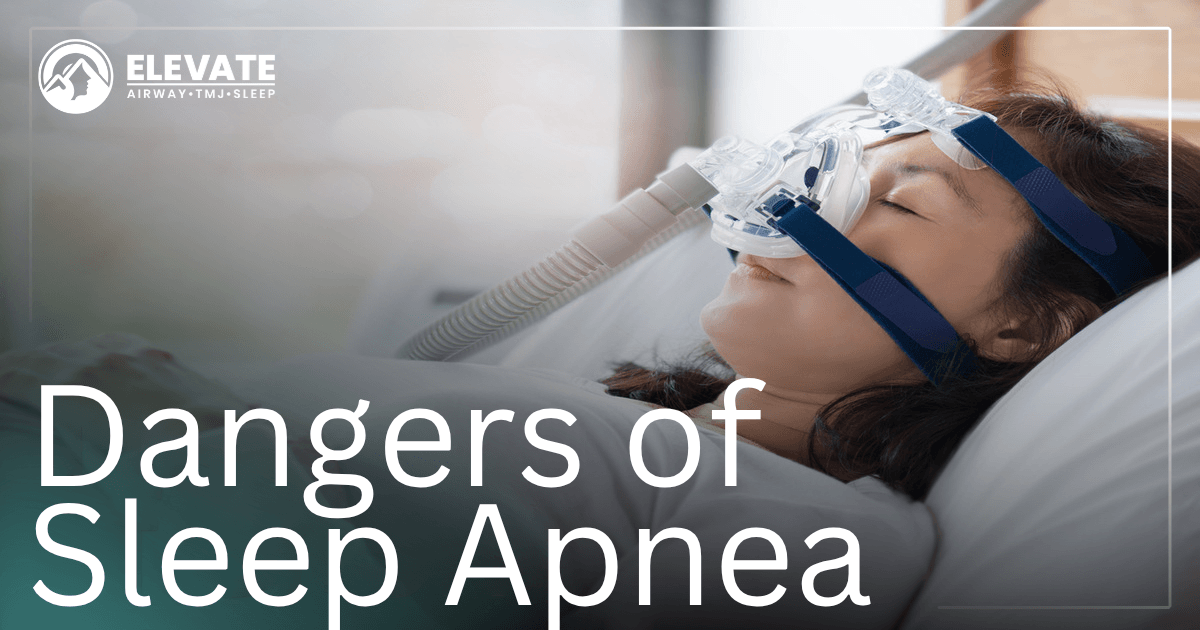
For some people, continuous positive airway pressure is recommended to help keep the airway open during sleep. For others, oral appliance options may be appropriate, especially in cases of obstructive sleep apnea related to jaw position or airway collapse. Weight management, reducing alcohol before bed, and addressing nasal congestion may also help in some cases, though they are not always enough on their own.
Patients exploring non-CPAP options often want to understand whether an oral device could support better nighttime breathing. Elevate Airway offers more information about sleep apnea treatment for adults for those trying to make sense of next steps.
Why Early Action Matters
Untreated sleep apnea tends to linger because it happens during sleep, when you are least able to observe it directly. That makes it easy to postpone. But delay is exactly what allows the risk to compound.
The longer sleep apnea goes untreated, the more time there is for repeated oxygen disruption, inflammation, blood pressure changes, and poor sleep quality to affect the body. In severe cases, untreated sleep apnea has even been associated with premature death. That is not meant to be alarmist. It is simply a reminder that this is a real medical issue, not just a nuisance.
If you have symptoms, if a partner has noticed snoring or gasping, or if you are dealing with unexplained fatigue, it is worth taking seriously.
The Bottom Line on Why Sleep Apnea Is Dangerous
So, why is sleep apnea dangerous? Because it repeatedly interrupts breathing, strains the heart and brain, reduces oxygen, fragments sleep, and raises the risk of serious health consequences over time.
Sleep apnea can affect blood pressure, heart rate, mood, focus, safety, and long-term cardiovascular health. Obstructive sleep apnea is the most common form, but central sleep apnea and complex sleep apnea also deserve careful diagnosis. The danger is not only what happens in one bad night. It is what happens when hundreds of bad nights stack up.
If something feels off, persistent snoring, fatigue, morning headaches, mood changes, or restless unrefreshing sleep, it may be time to stop normalizing it. Answers are available, and treatment can make a meaningful difference.